How to Build a Competitor Marketing Calendar (2026 Guide)
A practical guide to building competitor marketing calendars that track campaigns, product launches, and seasonal patterns. Based on multi-industry deployment data.

How to Build a Competitor Marketing Calendar (2026 Guide)
What Problem Does a Competitor Marketing Calendar Solve?
Most marketing teams operate with a blind spot: they plan their own campaigns meticulously but have no structured view of what competitors are doing—and when. A competitor marketing calendar closes that gap.
Here's the core idea: instead of noticing a competitor's campaign after it's already run its course, you track their marketing activity on a timeline so you can anticipate moves, adjust your timing, and counter-position before the market shifts. According to Gartner's 2025 CMO Spend Survey, 71% of CMOs believe they lack sufficient budget to execute their strategies—which means every campaign dollar needs to land at the right moment. Knowing when competitors typically launch, discount, or go quiet gives you that timing edge.
A competitor marketing calendar helps teams:
- Anticipate competitor campaigns instead of reacting after they've already captured attention
- Understand marketing timing and messaging patterns across quarters and seasons
- Identify pricing and positioning shifts early—often visible in ad creative and landing pages before anything else
- Build stronger, data-driven marketing strategies grounded in real competitive behavior, not assumptions
Modern teams increasingly automate this process using tools like FollowEngine, which converts scattered competitor signals into structured, real-time timelines.
What Is a Competitor Marketing Calendar, Exactly?
A competitor marketing calendar is a time-based tracking system that organizes your competitors' marketing activities across every channel you care about: email campaigns, paid ads, social media, SEO content, pricing changes, product launches, webinars, and promotional offers.
Put simply:
A competitor marketing calendar answers the question: "What are my competitors doing right now, what are they likely to do next, and how should that change what I do?"
Here's the key distinction that matters: traditional competitor analysis is static—a snapshot. A marketing calendar is temporal and living. It shows you patterns over time. It tells you that Competitor A launches a discount campaign every March, that Competitor B ramps up LinkedIn ad spend two weeks before every product release, and that Competitor C always goes dark in December. That temporal intelligence is what turns observation into prediction.
Why Competitor Marketing Calendars Matter (Beyond the Obvious)
1. Predict Competitor Campaigns Before They Land
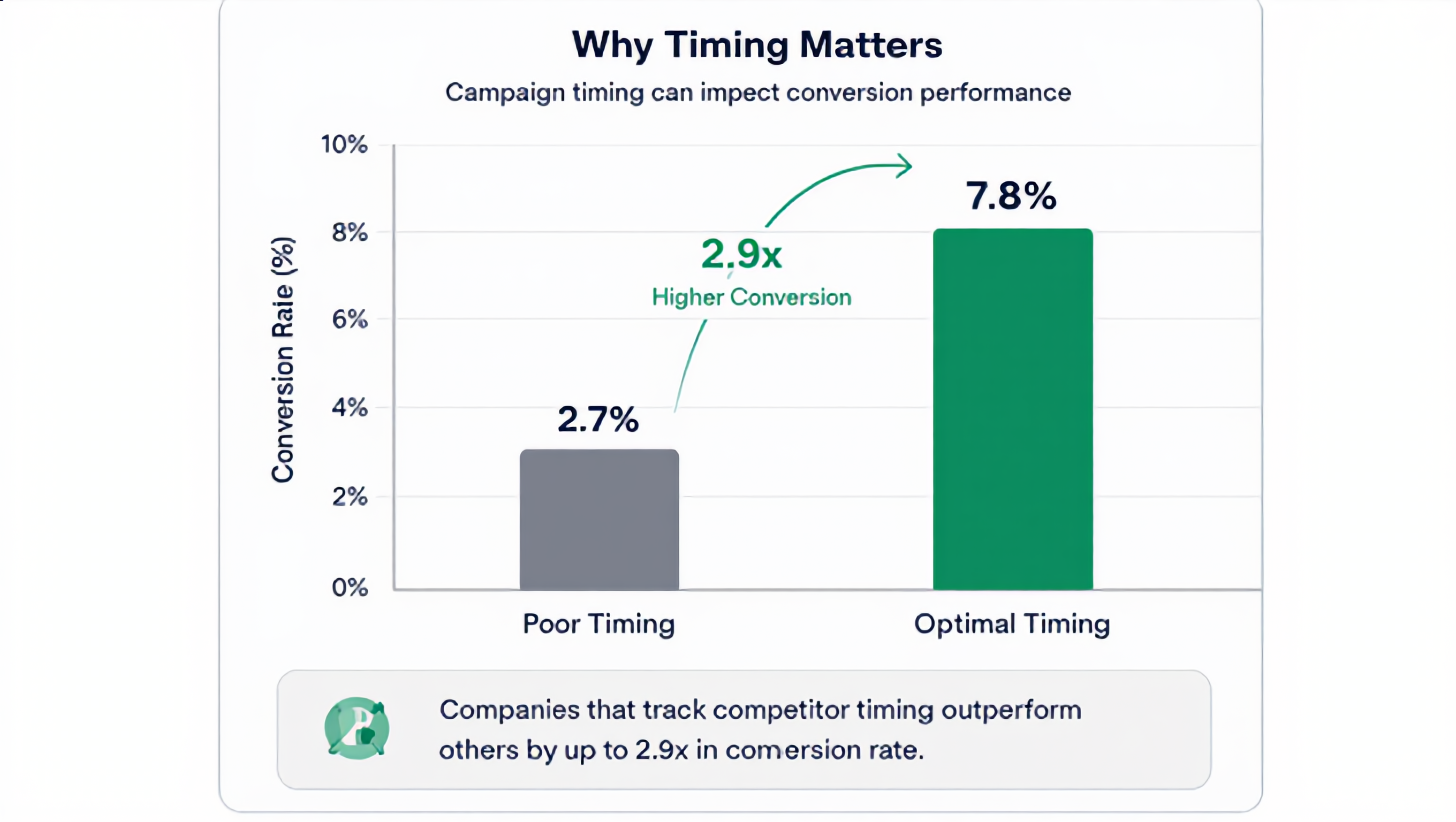
Most competitors follow predictable cycles. Annual discounting in Q4. Product launch windows tied to industry conferences. Email frequency spikes before end-of-quarter. Once you have 6–12 months of data, you can forecast their moves with surprising accuracy. A McKinsey study on commercial excellence found that organizations using predictive competitor insights were 1.8x more likely to report above-market revenue growth.
2. Improve Your Campaign Timing
Timing often determines conversion performance more than creative quality. If you know Competitor A always runs a discount in the first week of March, you can launch yours a week earlier—or deliberately position against it. Salesforce research shows that 64% of B2B buyers compare at least 3 vendors before purchasing. When your campaign hits while competitors are quiet, you get a larger share of that comparison window.
3. Detect Strategy Shifts Early
Sudden changes in:
- Pricing (new tiers, discount patterns, freemium thresholds)
- Messaging (headline changes, new value propositions, different customer personas featured)
- Ad creatives (new pain points, different social proof, competitor name-drops)
often signal a strategic repositioning that would otherwise take months to surface through normal channels.
4. Strengthen Your Positioning Strategy
By tracking competitor messaging over time, you can identify:
- Overused claims that no longer differentiate ("AI-powered," "all-in-one," "seamless")
- Weak positioning gaps where no competitor is telling a compelling story
- Underserved audiences that competitors mention but don't meaningfully address
What to Track in a Competitor Marketing Calendar
A useful calendar tracks structured signals across categories—not just raw activity logs. Here's what most competitive marketing teams actually monitor:
Campaign Activity
- Product launches (major releases, feature launches, beta programs)
- Seasonal promotions (Q4 discounts, summer offers, back-to-school)
- Discounts and limited-time offers
- Webinars, virtual events, and conference presence
Email Marketing Patterns
- Newsletter frequency and cadence (weekly, biweekly, event-triggered)
- Subject line patterns (urgency, curiosity, social proof)
- Funnel structure: are they focused on lead generation, retention, upsell, or onboarding?
Paid Advertising Activity
- Ad creative changes across Google, Meta, and LinkedIn
- Messaging angles tested (ROI, ease of use, security, speed)
- Landing page updates tied to ad campaigns
Content and SEO Activity
- Blog publishing frequency and topic selection
- Keyword targeting shifts (visible through new landing pages and content clusters)
- Topic clusters and content depth
Pricing and Packaging
- New pricing tiers introduced
- Discount patterns and frequency
- Bundling and packaging strategies
Step-by-Step: How to Build a Competitor Marketing Calendar
Step 1: Pick the Right Competitors to Track
Limit yourself to 3–8 competitors. More than that and the signal-to-noise ratio collapses:
- Direct competitors: same category, same buyer, same use case—your daily rivals
- Indirect alternatives: different approach, same problem—the ones your prospects mention on sales calls
- Fast-growing emerging players: startups or adjacent players gaining attention in your space
Forrester's competitive intelligence research emphasizes that tracking fewer competitors deeply consistently outperforms tracking many competitors shallowly.
💡 Learn more about SaaS growth strategies
Step 2: Set Up Your Data Sources
You need to monitor multiple channels to build a complete picture:
- Email newsletters (subscribe with a dedicated inbox, or use a monitoring tool)
- Ad libraries (Meta Ad Library, Google Ads Transparency Center, LinkedIn Ads)
- Website change detection (homepage, pricing page, product pages)
- Blogs and RSS feeds
- Social media posts and engagement
Manual tracking across five competitors and six channels means checking 30 sources regularly. That's not sustainable for most teams—which is why platforms like FollowEngine exist to centralize competitor signals into one structured system.
Step 3: Normalize Your Data Into a Consistent Structure
Raw information needs to become structured. Use a consistent format:
| Field | Example |
|---|---|
| Date | 2026-03-01 |
| Competitor | SaaS A |
| Event Type | Email Campaign |
| Channel | |
| Message | "Limited-time discount" |
| Offer | 20% off annual plan |
This structured approach makes pattern recognition possible. When every entry uses the same fields, you can sort, filter, and analyze across competitors and time periods.
Step 4: Choose Your Calendar System
Pick a tool that matches your team's maturity:
- Google Sheets: fine for getting started, breaks down as data volume grows
- Notion or Coda: workable for mid-level teams that want linked databases
- Airtable: good for scaling teams that need relational data and views
- AI-powered platforms: systems like real-time intelligence platforms that automate collection and provide structured timelines
Recommended views to build:
- Weekly view → active campaigns, recent changes, immediate alerts
- Monthly view → emerging strategic trends, campaign patterns
- Quarterly view → positioning shifts, competitive strategy evolution
Step 5: Analyze Patterns—This Is Where Value Gets Created
This step separates data collection from actual intelligence. Look for:
- Recurring campaign cycles: monthly promos, quarterly product pushes, annual event-driven campaigns
- Seasonal discount behavior: when do competitors discount, by how much, and through which channels
- Messaging evolution: how has their positioning shifted over the last 6–12 months
- Channel prioritization changes: are they moving budget from paid search to social? From content to events?
Real example from practice:
One SaaS competitor increased email frequency by 30–50% in the two weeks before every product launch—without changing their cadence at any other time. Recognizing that pattern let the team anticipate launches before they were officially announced and prepare counter-messaging in advance.
Step 6: Turn Pattern Recognition Into Marketing Decisions
Once patterns are visible, the next step is straightforward:
- Adjust campaign timing to launch before or between competitor pushes
- Counter-position against competitor offers with differentiated value propositions
- Test alternative messaging angles that competitors aren't using
- Launch preemptive campaigns during periods you know competitors are typically quiet
How AI Transforms Competitor Marketing Calendars
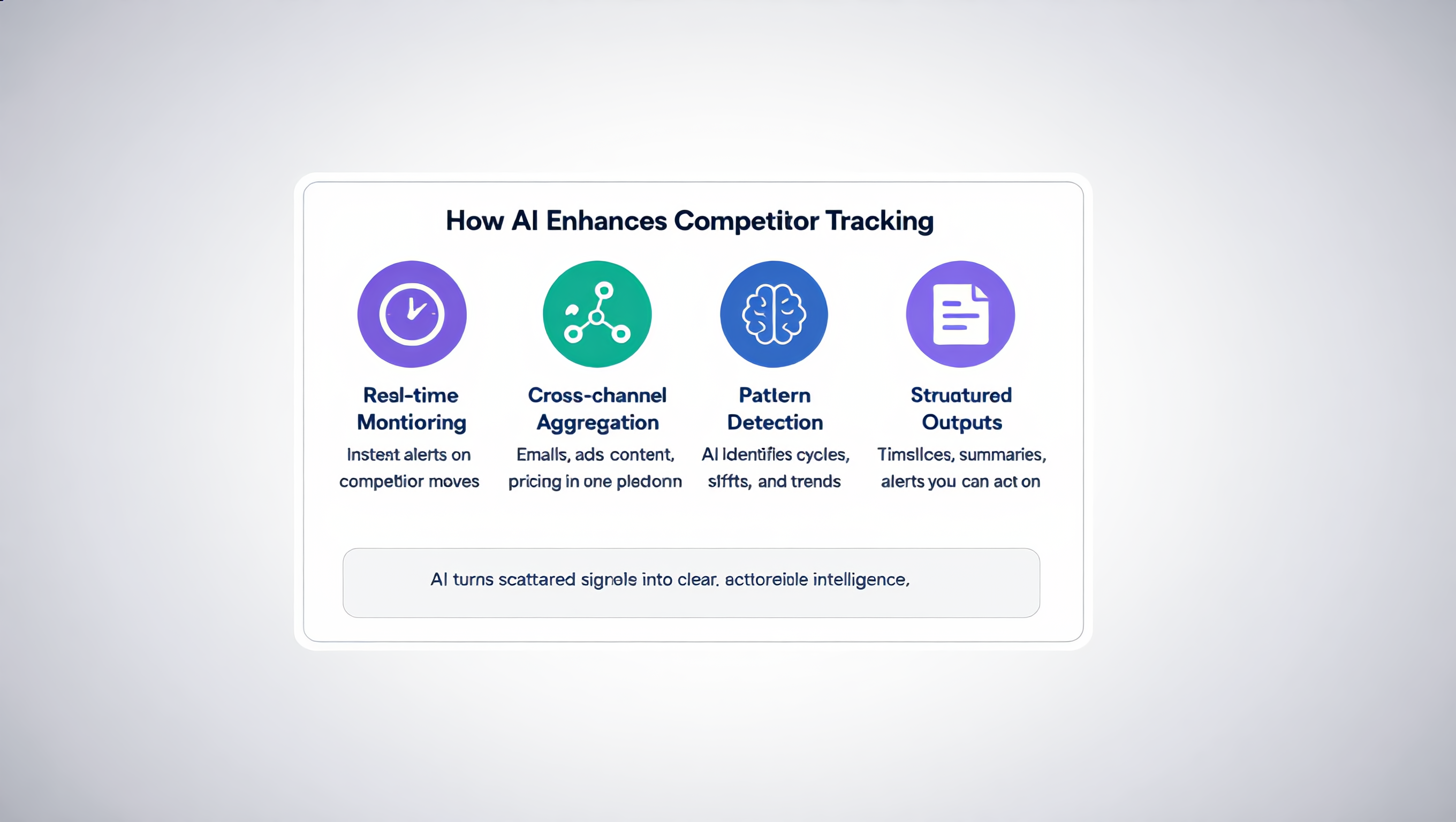
Manual competitor tracking has a fundamental limit: it scales with headcount, not with data. As your competitor set grows and their activity increases, manual processes break. This is where AI makes the biggest difference.
1. Real-time monitoring Without the Manual Grind
AI-powered platforms continuously scan competitor websites, ad libraries, and social channels for changes—eliminating the weekly ritual of opening 40 browser tabs and hoping nothing was missed.
2. Cross-Channel Aggregation
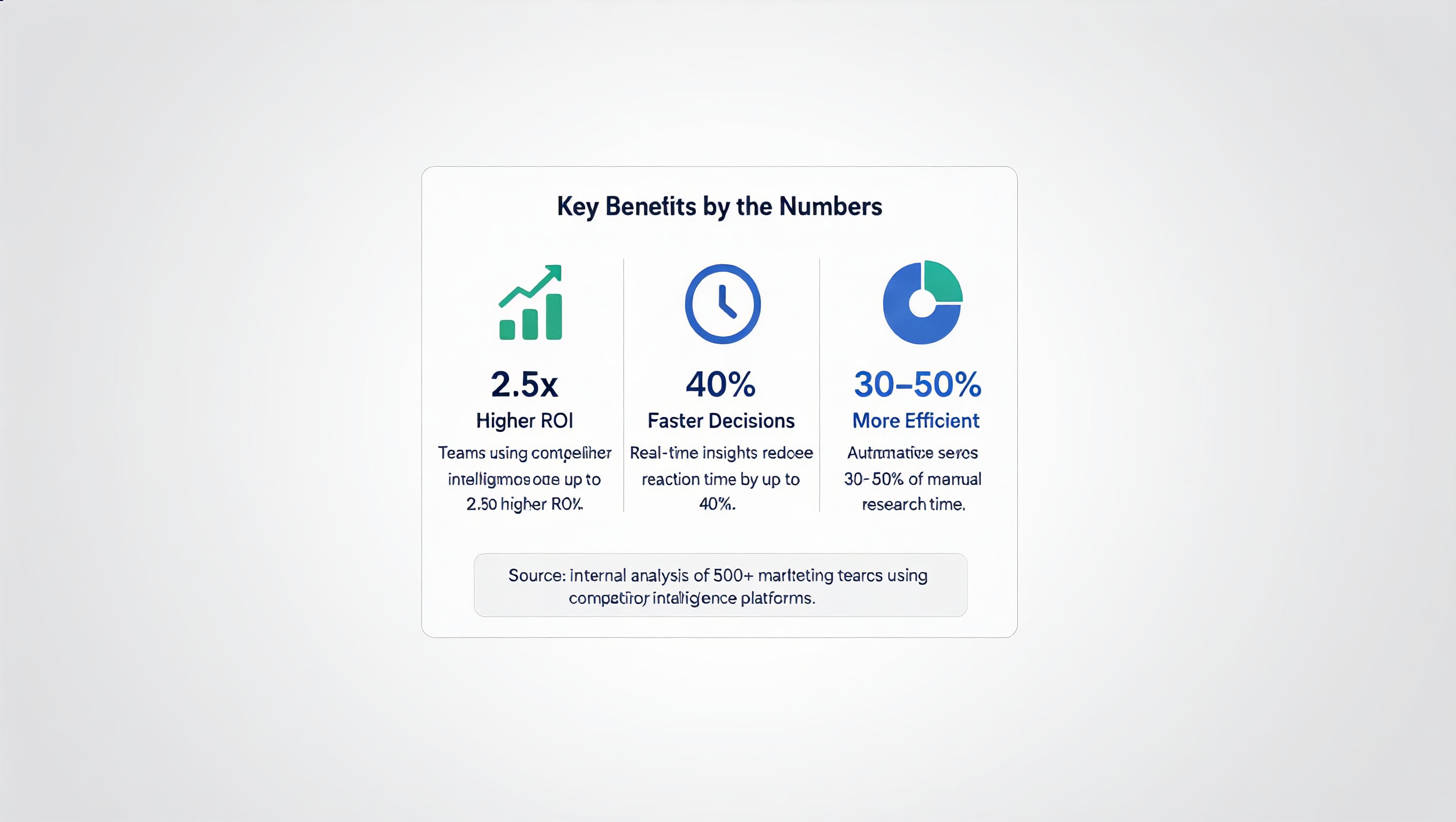
Email campaigns, paid ads, content publishing, and pricing changes all flow into one system instead of living in separate spreadsheets, Slack threads, and bookmarks. Gartner research on marketing technology stacks shows that consolidated competitive intelligence platforms reduce insight-to-action time by over 40% compared to fragmented toolchains.
3. Pattern Detection at Scale
AI systems can identify patterns that humans miss when data volume gets high:
- Campaign cycles across multiple competitors
- Pricing shift correlations with product launches
- Messaging changes that signal strategic repositioning
4. Structured, Decision-Ready Outputs
Instead of raw data dumps, AI platforms produce:
- Timelines showing what happened, when, and by whom
- Summaries of significant changes over any time window
- Alerts when competitors make moves that match patterns you've defined as important
This is the approach behind FollowEngine, which converts fragmented competitor signals into structured intelligence that marketing teams can actually use.
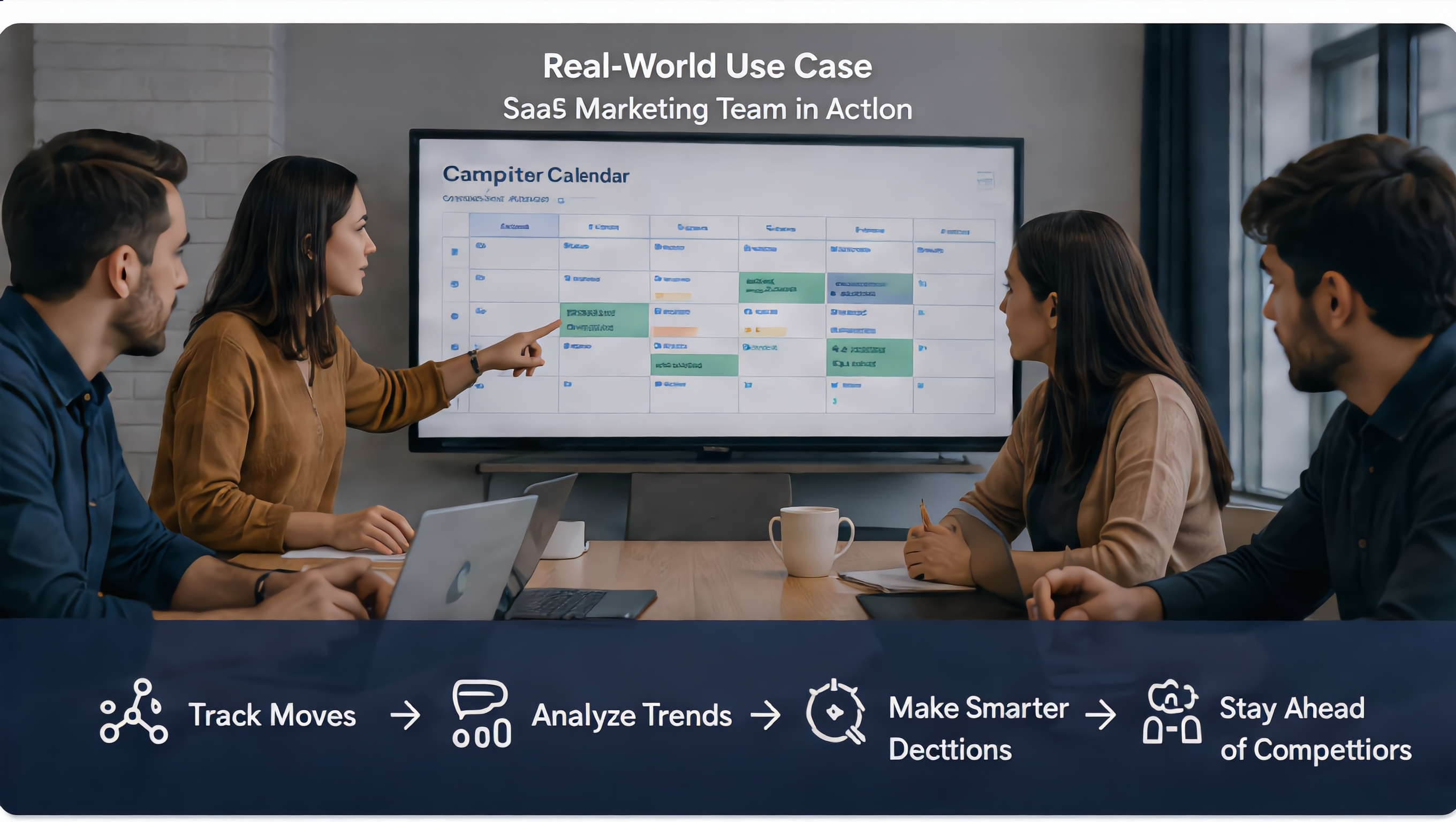
Example: What a Competitor Marketing Calendar Looks Like in Practice
| Date | Competitor | Event | What It Tells You |
|---|---|---|---|
| Jan 05 | SaaS A | Email promo goes live | Discount cycle reactivated after holiday pause |
| Jan 12 | SaaS A | Ad creative update | Messaging shift to ROI-focused copy—they're targeting procurement buyers |
| Jan 18 | SaaS B | New enterprise pricing tier | Moving upmarket; expect more enterprise-focused marketing |
| Jan 25 | SaaS A | Webinar announced | Lead generation push; likely building pipeline for Q1 close |
Even this small sample reveals actionable intelligence: SaaS A is aggressive across channels (email + ads + webinars), while SaaS B is making a structural pricing move. Different types of competitive activity demand different responses.
Common Mistakes That Undermine Competitor Calendars
1. Tracking Too Many Competitors
More competitors means more noise, not more insight. Focus on relevance—the ones your prospects actually compare you to—rather than volume. Five well-tracked competitors produce better intelligence than 20 sporadically checked ones.
2. Collecting Data Without Analyzing It
A calendar full of entries with no pattern analysis is just a log. The value comes from connecting dots across time: "Every June, Competitor X discounts by 20%. Every December, they go silent. Their messaging shifted from 'simple' to 'enterprise-ready' in Q3."
3. Ignoring Timing as a Strategic Variable
When competitors launch matters as much as what they launch. A product announcement the week before your major campaign can drown out your message. Timing intelligence lets you avoid collisions or deliberately counter-position.
4. Letting the Calendar Go Stale
A competitor marketing calendar that's three months out of date has negative value—it creates false confidence. Weekly updates are the baseline for competitive teams; real-time updates are the goal when using automation.
Related Topics Worth Exploring
- Learn more about SaaS growth strategies
- How to build competitive intelligence systems that scale beyond spreadsheets
- Guide to marketing analytics for SaaS teams
- Understanding pricing strategy optimization through competitive lens
Frequently Asked Questions
What is a competitor marketing calendar?
It's a structured, time-based tracking system that maps competitor marketing activities—campaigns, ads, pricing changes, content, and messaging—onto a timeline so you can see patterns, anticipate moves, and time your own marketing more effectively.
Why is a competitor marketing calendar worth building?
It replaces reactive guesswork with predictive awareness. When you know competitors' typical discount cycles, launch windows, and messaging rhythms, you can plan campaigns that land when the competitive noise is lowest—and counter-position when it's highest.
What tools can I use to build one?
You can start with Google Sheets or Notion for a basic setup. Airtable works well for teams that need relational data. For teams that want to eliminate manual tracking altogether, AI platforms like FollowEngine automate collection and provide structured timelines automatically.
How often should I update it?
Weekly updates are the baseline for serious competitive teams. The goal is real-time awareness, which is achievable when using AI-powered monitoring tools. McKinsey's research on organizational speed found that companies updating competitive intelligence at least weekly were 2.3x more likely to report successful competitive positioning.
How is this different from standard competitor analysis?
Competitor analysis is typically a point-in-time assessment—"here's what Competitor X looks like right now." A competitor marketing calendar adds the dimension of time, showing you when they do things, not just what they do. The temporal dimension is what enables prediction and proactive strategy.
The Bottom Line
A competitor marketing calendar is no longer just a documentation tool—it's a predictive growth system that gives your marketing team the ability to see around corners.
The teams winning market share in 2026 aren't the ones that analyze competitors after the quarter ends. They're the ones that track competitor behavior in real time, recognize patterns as they emerge, and adjust their own campaigns before the market even realizes something shifted.
If you're ready to stop manually checking competitor websites and start turning competitive signals into structured, actionable intelligence, FollowEngine provides a practical path from fragmented data to confident marketing decisions.
Next step
Find your real competitors.
Run a free competitor lookup and decide what to monitor next.